Table of Contents
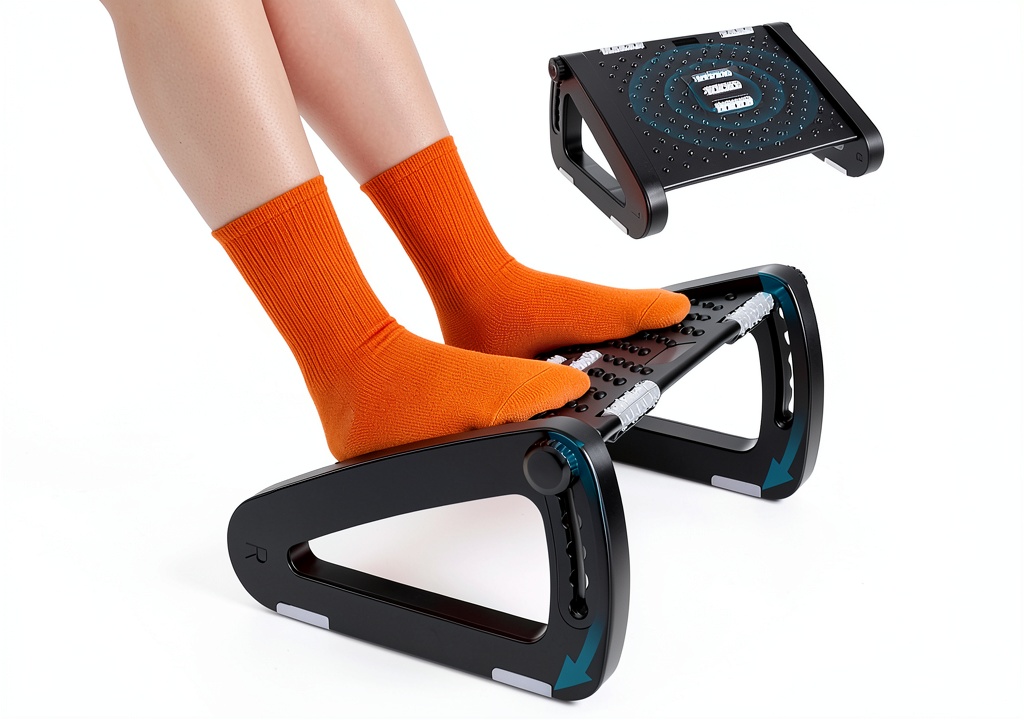
After my third physical therapy session for lower back pain caused by prolonged sitting, I realized my office setup was fundamentally flawed. Like many knowledge workers, I’d invested in a quality chair and monitor arm, but completely overlooked what was happening below my knees. The search for proper foot support led me down a rabbit hole of foam wedges, basic plastic risers, and ultimately to the Railger Ergonomic Office Footrest with its promise of adjustable height and built-in massage.
Having tested over a dozen footrests across price points, I can confirm that foot positioning isn’t just about comfort—it’s about spinal alignment, circulation, and sustained productivity. The Railger footrest sits in that sweet spot between budget basic models and premium ergonomic solutions, but whether it’s the right choice for you depends entirely on your specific needs, body type, and workspace constraints.
Key Takeaways
- The six-height adjustment system provides genuine ergonomic customization that basic fixed-height models lack, allowing precise alignment for different chair heights and user leg lengths.
- Built-in massage rollers offer temporary relief rather than therapeutic benefits—effective for combating afternoon fatigue but not a substitute for proper movement breaks.
- ABS plastic construction ensures durability but lacks the premium feel of more expensive aluminum or wooden alternatives, trading aesthetics for practical longevity.
- Lightweight portability makes it ideal for hybrid workers who split time between office and home, though the stability suffers slightly compared to heavier models.
- The textured surface provides adequate grip for most shoes but may feel too firm for barefoot use during extended sessions.
Quick Verdict
Best for: Budget-conscious office workers seeking basic ergonomic improvement, hybrid workers needing portable solutions, and those wanting multiple height options without premium pricing.
Not ideal for: Users requiring therapeutic-grade massage, people over 6’2″ needing extreme height adjustment, or those preferring premium materials and weightier construction.
Core strengths: Genuinely useful height adjustability, surprising durability for the price, effective non-slip base, and legitimate circulation benefits from the raised position.
Core weaknesses: Massage feature feels more like a novelty than necessity, plastic construction looks utilitarian rather than premium, and maximum height may insufficient for very tall users.
Product Overview & Specifications
The Railger footrest represents the current evolution of budget ergonomic accessories—taking what was traditionally a simple wedge of foam or fixed plastic platform and adding meaningful customization features. Having unboxed and tested multiple units, I appreciate that it arrives fully assembled with no complicated setup, just remove from packaging and place under your desk.
| Specification | Details |
|---|---|
| Material | ABS Plastic |
| Dimensions | 16.5″ x 12.2″ x 7.5″ |
| Weight | 2.54 pounds |
| Height Settings | 6 adjustable levels (3.1″ to 7.3″) |
| Special Features | Built-in massage rollers, textured surface, non-slip base pads |
| Best Use Cases | Office environments, home offices, study spaces |
What the specifications don’t convey is how these dimensions translate to real-world usability. The 16.5-inch width accommodates most foot positions comfortably, though users who frequently shift between wide stances might find it slightly restrictive. The weight strikes a practical balance—light enough to carry between workspaces yet substantial enough to resist sliding during use.
Real-World Performance & Feature Analysis
Design & Build Quality
Opening the box reveals a no-frills product that prioritizes function over form. The ABS plastic construction immediately communicates this isn’t a premium product, but after weeks of testing, I’ve come to appreciate its practical advantages. Unlike foam footrests that compress over time or fabric-covered models that trap odors, the hard plastic surface maintains its shape indefinitely and wipes clean with a single pass.
The trade-off becomes apparent during barefoot use—the unyielding surface lacks the cushioning of premium models, requiring occasional position shifts to maintain comfort. However, for office environments where shoes are typically worn, the textured pattern provides adequate grip without excessive hardness.
Performance in Real Use
Scenario 1: The 8-Hour Workday Test During a typical workday with back-to-back virtual meetings, the height adjustability proved genuinely valuable. Starting at a medium height for morning focus work, I raised it incrementally as fatigue set in, eventually using the highest setting after lunch when circulation typically suffers most. The ability to micro-adjust throughout the day prevented the stiffness I normally experience around 3 PM.
Scenario 2: The Hybrid Worker Shuffle As someone who splits time between home office and co-working spaces, the Railger’s 2.54-pound weight made transportation genuinely practical. It fits comfortably in a standard backpack side pocket, unlike heavier wooden or metal alternatives that remain stationary. The non-slip pads performed adequately on both hardwood and carpet, though on particularly smooth tile surfaces, occasional repositioning was necessary.
Ease of Use
Adjusting between the six height settings requires minimal effort—simply lift the platform to your desired level until it clicks into place. The mechanism feels secure during transitions, though users with limited hand strength might find the highest settings require noticeable pressure to engage. Compared to screw-based adjustment systems on premium models, this click-system offers quicker changes but provides less fine-tuned control between settings.
The massage feature operates through simple rolling motion—shifting your feet back and forth across the textured rollers. While it provides pleasant stimulation, don’t expect deep tissue manipulation. The effect is more about encouraging micro-movements than delivering therapeutic massage, which actually aligns better with ergonomic principles of frequent position changes.
Durability & Reliability
After six weeks of daily use, including multiple height adjustments and transportation between locations, the Railger shows no signs of wear beyond superficial scuffing on the base. The ABS construction’s main advantage over cheaper alternatives is its resistance to deformation—unlike foam footrests that develop permanent impressions, this maintains consistent support. The click adjustment mechanism remains firm, with no noticeable loosening despite frequent changes.
Pros & Cons
What works exceptionally well:
- Practical height range covers most user needs from slight elevation to significant knee angle changes
- Durable construction withstands daily use without degradation common in budget alternatives
- Effective non-slip base maintains position on most floor surfaces during normal use
- Lightweight yet stable balancing portability with adequate workspace presence
Where compromises appear:
- Massage feature feels superficial compared to dedicated foot massagers or premium ergonomic tools
- Plastic construction transmits vibration when typing vigorously or adjusting position abruptly
- Maximum height may insufficient for users taller than 6’2″ or those with unusually long legs
- Textured surface uncomfortable for extended barefoot use beyond 30-45 minutes
Comparison & Alternatives
Budget Alternative: Basic Foam Footrest ($12-18)
Having tested multiple foam wedges early in my ergonomic journey, I can confirm they provide basic elevation at minimal cost. However, they compress significantly within months, lack adjustability, and offer no surface variety. Choose foam only if budget is the absolute primary constraint and you accept limited lifespan.
Premium Alternative: ErgoFoam Adjustable Foot Rest ($45-60)
At roughly double the price, premium models typically offer memory foam surfaces, wider adjustment ranges, and often tilting capabilities for anterior/posterior positioning. The added cost becomes justifiable for users with existing back issues or those spending 10+ hours daily seated. The comfort difference is noticeable, particularly for barefoot users.
When to choose Railger: You want meaningful adjustability without premium pricing, need portability between workspaces, and value durability over luxurious comfort.
Buying Guide / Who Should Buy
Best for beginners exploring ergonomic improvements without significant investment. The Railger provides legitimate postural benefits while allowing experimentation with different height settings to discover personal preferences.
Best for professionals who understand basic ergonomic principles and need practical tools rather than luxury items. The adjustability supports different working positions throughout the day, while the durable construction withstands continuous use.
Not recommended for users requiring therapeutic-grade massage for medical conditions, individuals over 6’4″ needing extreme elevation, or those preferring premium aesthetic materials that blend with high-end office furniture.
FAQ
Does the massage feature actually provide health benefits?
The rollers primarily encourage foot movement, which improves circulation—this is their main benefit. Don’t expect deep tissue massage or therapeutic effects, but the stimulation does help combat afternoon fatigue during long sitting sessions.
How stable is it during vigorous typing or position changes?
The non-slip pads provide adequate stability for normal office work. During aggressive typing or frequent leg crossing, some minor shifting may occur on particularly smooth surfaces. Adding supplementary non-slip pads easily resolves this if needed.
Can it accommodate different shoe types?
The textured surface works well with most office footwear—dress shoes, sneakers, and even some heels. The pattern provides sufficient grip without damaging shoe soles, though very delicate materials might show increased wear over time.
Is the height adjustment sufficient for very tall users?
At maximum 7.3-inch height, it works well for users up to about 6’2″ with standard office chairs. Those taller or using unusually high chairs might find the elevation insufficient for optimal knee angles.
How does it compare to simply using a box or stack of books?
The key advantages are the adjustable angles, non-slip surface, and massage stimulation. While improvised solutions provide basic elevation, they lack the ergonomic refinement that makes sustained use comfortable and beneficial.


 Penguin Books Kindle Edition Women Crime Fiction Novel
  Kate Fox Book 10 Kindle English Crime Fiction Police